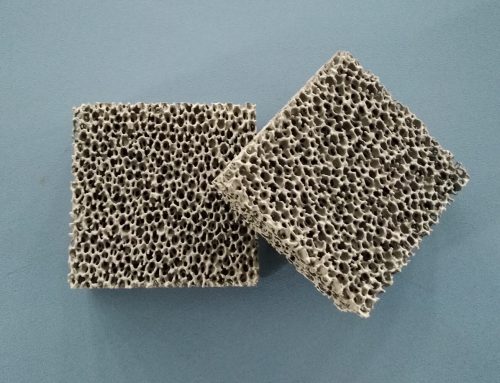
The filtration micron level of copper foam varies according to its pore size and production process, and can generally filter particles from a few microns to tens of microns.
Copper foam, a metal material with a porous structure, has a wide range of applications in the filtration field. Its unique pore structure allows copper foam to effectively intercept and filter out impurity particles in the fluid. So, how many micron particles can copper foam filter?
Structural Properties of Copper Foam
The porous structure of copper foam is the key to its filtration function. These pores are uniform in size and densely distributed, providing ample channels for fluids. At the same time, the pore wall is smooth, not easy to adhere to impurities, to ensure the durability of the filtration effect.
Filtration Principle of Copper Foam
When the fluid passes through the copper foam, the impurity particles will be intercepted by the pores. Particles larger than the pore size are directly blocked out, while particles smaller than the pore size may be subject to adsorption, inertial collision and other forces, and ultimately be captured inside the pore. Therefore, the filtration effect of copper foam is closely related to the pore size.
The micron level of copper foam filtration
The filtration micron level of copper foam is not fixed, but varies according to its pore size and production process. Generally speaking, common copper foam products on the market can filter particles of several microns to tens of microns. In practice, according to the specific needs of the selection of copper foam with the appropriate pore size to achieve the best filtration effect.
Application areas of copper foam
With excellent filtration performance, copper foam has been widely used in many fields. For example, in the petrochemical industry, copper foam is used for oil filtration and purification; in the field of water treatment, copper foam plays an important role in removing suspended solids and harmful substances in water. In addition, copper foam is also widely used in air filtration, catalyst carrier and so on.
In conclusion, copper foam as a kind of efficient filtration material, its filtration micron level varies depending on the pore size and production process. By understanding the structural properties, filtration principles and application areas of copper foam, we can better utilize this material to provide convenience for actual production and life.