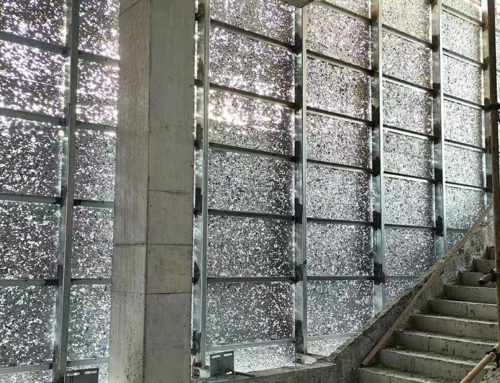
1. Lightweight and High Strength
The density of foam ceramic lightweight partition panels typically ranges from 300 kg/m³ to 600 kg/m³, which is significantly lower than the density of traditional solid clay bricks (approximately 1800kg/m³-2000kg/m³). This notable weight reduction not only makes the material easier to handle during transportation and installation but also reduces the building’s self-weight, lessens the load on the foundation structure, and enhances the overall structural safety of the building. Despite its lighter weight, through specialized production processes and formula design, foam ceramic lightweight partition panels still maintain sufficient strength to meet the load-bearing requirements for architectural partitions, avoiding common issues like cracking and deformation.
2.Excellent Fire Resistance
As an inorganic material, foam ceramic is inherently non-combustible and does not release any toxic or harmful gases under high temperatures. Its fire resistance rating reaches A1 level, which is the highest fire standard among existing building materials. Even in the event of a fire, foam ceramic lightweight partition panels can effectively contain the spread of the flames, buying valuable time for safe evacuation and rescue operations by the fire department, thereby significantly improving the overall fire safety performance of the building.
3.Good Sound Insulation Effect
The internal structure of foam ceramic lightweight partition panels contains a large number of evenly distributed micro-pores. These pores can effectively absorb sound and block its transmission. According to relevant test data, its sound insulation performance can exceed 40 decibels (dB), meeting the sound insulation requirements for various architectural spaces, including residential buildings, hotels, and office towers, providing people with a quiet and comfortable living and working environment.
4.Superior Thermal Insulation Performance
The porous structure of foam ceramic provides it with an extremely low thermal conductivity, typically ranging between 0.08 to 0.12 Watts per meter Kelvin (W/(m·K)).This characteristic gives foam ceramic lightweight partition panels excellent thermal insulation and heat barrier effects, which can significantly reduce heat exchange between the interior and exterior of the building, thereby lowering the energy consumption of air conditioning and heating equipment, and achieving goals for energy saving and emission reduction. In winter, it prevents indoor heat loss, maintaining warmth; in summer, it blocks external heat from entering, keeping the interior cool, thus reducing the frequency of air conditioner use and energy consumption.